Tuesday, 2 June 2020

CHICKEN CHANGEZI RECIPE, HOW TO MAKE CHICKEN CHANGEZI!

Chicken changezi recipe is a variety chicken recipe that has some Mughlai flavor in it. It is an ancient recipe originated from the era of Changez khan(Genghis khan).
This is a delicious chicken recipe and is a rich recipe made using rich ingredients. It has a gravy consistency which is suitable to have it with rotis or parathas.
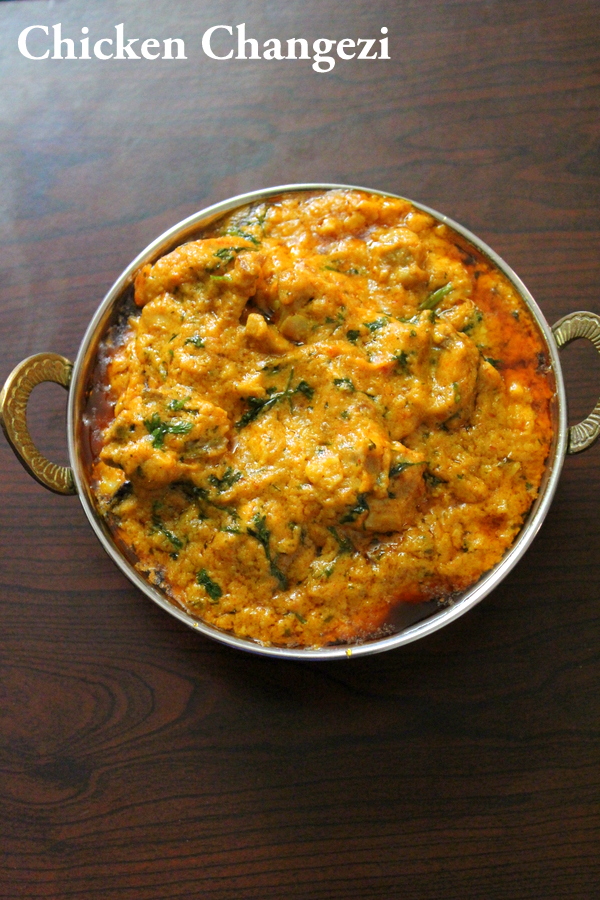
chicken changezi
I made this recipe for the first time and instantly liked its taste as it is less spicy and has the rich taste of the recipe.
I have posted every tried and tested the chicken recipe on the blog and most of the recipes are made along with the videos and all the recipes are mind-blowing and would like to update more and more chicken recipes.
This recipe is not known to many and I would like to share more details on this chicken recipe through my blog.
It has great flavors, spices, richness to the whole gravy. I have added cream, yogurt, tomato puree, fried onion paste along with dry fruits paste into the recipe, and overall this has made the whole recipe quite rich.
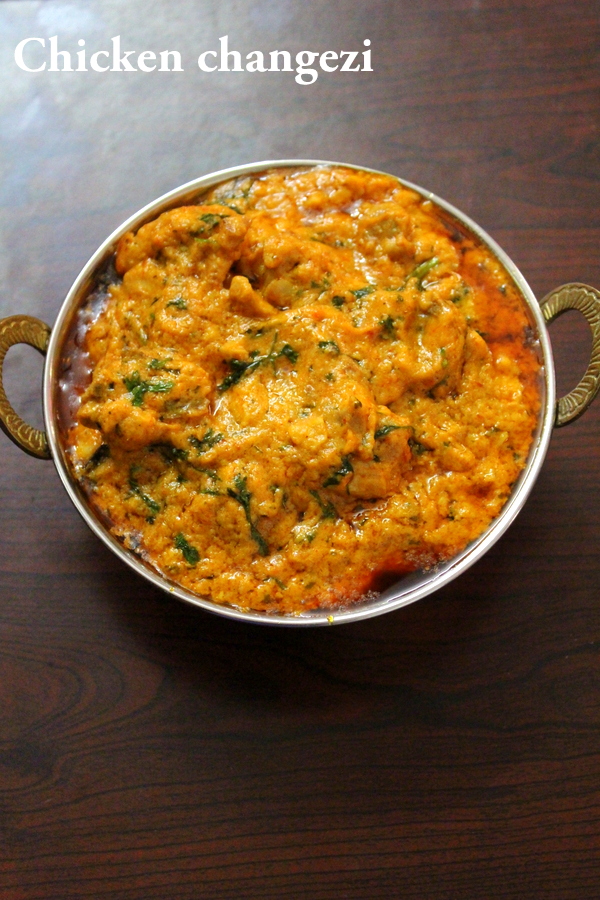
chicken changezi recipe
While making chicken changezi, generally chicken is roasted separately but here, I have made it into a one-pot dish and it has turned out as similar to the normal method of making chicken changezi.
I usually make some of the chicken recipes as one-pot recipes and not separately which turn out well and also helps in cooking the chicken and the masala gravy perfectly. The main masala of changezi recipe is of onion and Kaju paste sauteed in oil or ghee.
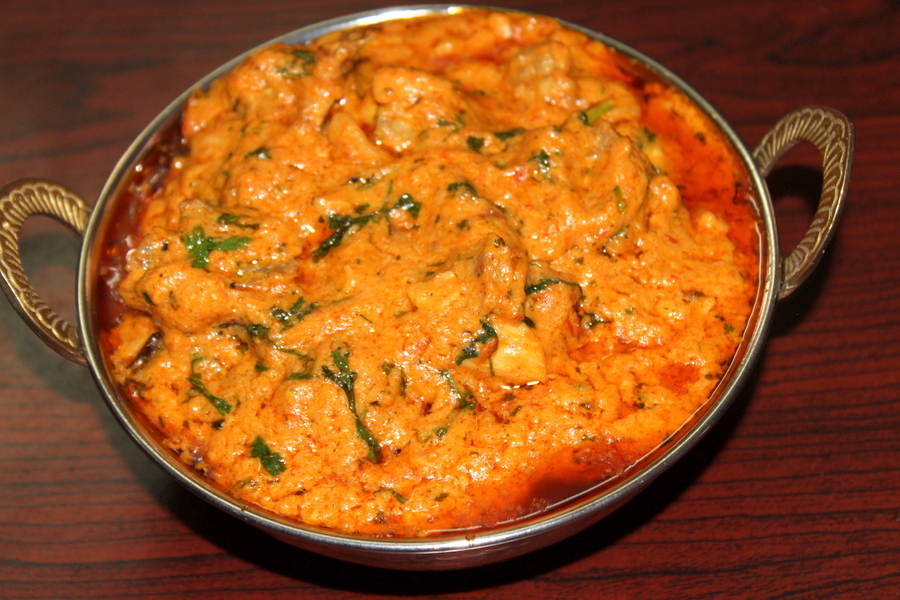
To this gravy ingredient like milk, cream, yogurt, tomato puree are added to give a gravy-like consistency.
The chicken is roasted well and all these masala paste are added and cooked well to form a thick gravy suitable to make during several occasions.
I shall update with many more chicken recipes as I keep blogging and hopefully, I add them along with videos too and would love to hear feedback from my blog readers which encourages me to post more recipes.
Below is the recipe on how to make chicken changezi, a variety Mughlai chicken recipe with step by step details and procedure too.

Ingredients

Onion tomato Kaju paste for chicken changezi:

  • 3 tbsp oil
  • 3 onions thickly chopped
  • 8-10 Kaju/cashew nuts
  • 8-10 almonds/badam
  • 3 tomatoes thickly chopped

Other ingredients to make chicken changezi:

  • 2 tbsp oil
  • 3 cloves/lounge
  • 1 green cardamom/elaichi
  • 1 small cinnamon stick/dalchini
  • 1 tsp ginger garlic paste
  • 500 gms chicken cleaned well and washed well with turmeric powder or lemon extract
  • salt to taste
  • 1 tsp red chili powder
  • 1/4 tsp turmeric powder/Haldi
  • 1 cup yogurt/curd
  • blended onion tomato Kaju paste
  • 1/2 cup milk
  • 2 tbsp cream/malai
  • 1 tsp kasoori methi crushed
  • 3-4 tbsp freshly chopped coriander leaves

Instructions

To make onion tomato Kaju badam paste:

  • Firstly, in a pan, add oil and heat it.
  • Add chopped onions, Kaju, badam, and saute the onions until they turn a slight golden color.
  • After onions are cooked well, add chopped tomatoes into it and cook until the tomatoes turn soft.
  • Switch off the flame.
  • Cooldown the masala.
  • Take a blending jar, add the masala, and blend the masala into a fine smooth paste by adding little water or milk.
  • Keep the masala aside for later use.

Making of chicken changezi:

  • Take a wok, add oil, and heat it.
  • Into it add whole garam masala such as cloves, dalchini, elaichi.
  • Add ginger-garlic paste and saute until the raw smell disappears.
  • Add the chicken into it and roast well until the color of chicken changes.
  • Add salt as per taste, red chili powder, turmeric powder, mix well, cook and roast the chicken for 10 minutes until oil starts releasing.
  • Add yogurt and cook for 5 minutes.
  • Add the blended onion tomato Kaju badam paste into the chicken and mix well.
  • Cook this gravy for 10-15 minutes on low flame or until the masala is cooked well and starts leaving oil at the sides.
  • Check if the chicken is tenderized.
  • Cook for some more time until chicken gets tendered.
  • Add milk into the chicken gravy, mix.
  • Add malai/cream into the chicken gravy and mix well.
  • Add salt as per taste if required.
  • Cook the gravy for few minutes on low flame.
  • Crush kasoori methi and add it into the chicken curry.
  • Also, add some freshly chopped coriander leaves and mix.
  • Cook for a few minutes on low flame and switch off the flame.
  • Serve hot with roti, paratha, or steamed rice.

Notes

1. Here, at the end of the recipe if one wants to add garam masala powder for more spicy flavor, then it is a better option to add some garam masala powder at the end.2. This gravy is slightly thick and if one wants to make slightly thin, add little more milk and cook the gravy.

Wednesday, 27 May 2020

A Healthier Fast Food Diet

Cars line up at a fast food drive-through.

Healthy Eating on the Run

People are busier than ever, and when crunched for time, fast food is the go-to meal for many. It's easy, cheap, and fast, but often not healthy. While it's always healthier to prepare your own food at home, with a little forethought and planning you can avoid some of the worst foods and make healthier choices at fast food restaurants.
An almost finished container of fast-food fries.

1. Watch Portion Sizes

Usually a small size is enough to satisfy your cravings. A small order of fries can be up to 100 calories less than its super-sized counterpart. A small sandwich or half a sandwich is often filling and will curb your hunger. You can even ask for the kid's meal to ensure smaller portions.
A grilled Caesar chicken wrap on whole wheat tortillas.

2. Go Deli-Style

Deli-style fast food restaurants offer many options that are lower in fat and calories. Choose whole wheat bread or a wrap, and add lots of veggies for a flavorful and filling sandwich. But skip the mayo!
Side order bowls of fresh fruit.

3. Pick the Better Side

Forget the standard french fry side order – try fresh fruit or a salad. Most fast food chains offer these healthier options.
A fresh side salad made of mixed lettuce and cherry tomatoes.

4. Add a Salad

Even if you do want those salty fries or that fried chicken, order a side salad as well. Fill up on greens and veggies to get fiber and vitamins. You may even feel more full and eat less of the unhealthy fast food.
Fresh grilled chicken sandwich on whole wheat bun.

5. Grilled Is Best

Even though chicken is a lean meat, many fried or breaded chicken options can have more fat and calories than a hamburger. Always choose grilled chicken over breaded or fried.
A woman eats an apple.

6. Snack Before Hitting the Road

You are more likely to give into temptation and stop in at a fast food joint if you are hungry. Before you go out, fill up on a healthy snack such as a piece of fruit, some veggies and hummus, cereal with skim or non-dairy milk, or low-fat yogurt.
A man sits on his car with an apple and bottle of water.

7. Curb the Cravings

Be prepared for cravings and keep healthy snacks ready and available. Keep them in your car or in your desk at the office so you can ward off cravings and stay away from the fast food. Drinking plenty of water will also keep you feeling more full and less likely to give into temptation.
A businesswoman buys a fruit salad at the supermarket.

8. Hit the Supermarket

Instead of a fast food chain, take your lunch in a local supermarket. You can find pre-cut fruit and veggie options, along with snacks such as low fat string cheese or yogurt. Many supermarkets also have salad and sushi bars, or other ready-made healthy foods.
A spoonful of mayonnaise.

9. Hold the Mayo!

Whatever you order in a fast food restaurant, hold the mayo! Mayo is full of fat and just one tablespoon contains nearly 100 calories! Try mustard instead for a low-calorie, low-fat condiment.
Sandwich, fries, and a glass of water.

10. Water Your Thirst

Water is the best way to quench your thirst. Don't add empty calories and sugar from sodas and other soft drinks to your meal. Water will help you feel full without adding calories to your diet.

Friday, 22 May 2020

Top 10 foods to try in Hong Kong!

Travelers are advised to read the FCO travel advice at gov.uk/foreign-travel-advice for the country they are traveling to.

All recommendations have been reviewed and approved as of 1 June 2017 and will be checked and updated annually. If you think there is any incorrect or out-of-date information in this guide please email us at goodfoodwebsite@immediate.co.uk.
Dining out is the social norm in Hong Kong and there's a wide range of dishes and restaurants to try. Navigate local markets and delicacies with our must-try list of food and drink.
 

3 top foodie tips

Food and cocktail combos

Cocktails are hugely popular with Hongkongers who love to experiment at events like the annual Wine & Dine Festival (26-29 October 2017), which last year featured such pairings as miso-marinated pork and a karate sour cocktail. Restaurant VEA offers a menu paired with inventive cocktails such as a consommé of shiitake mushrooms laced with whiskey.
Veggie trends
‘Hong Kong is seeing a boom in veggie food,’ says Australian chef Shane Osborne and according to chef Randy See of Le Port Parfumé, expensive caviar and white truffles no longer excite wealthy locals, who are more interested in the provenance of simple vegetables. And the quirkiest vegetable trend of all? Cindy Kuan of the Chinese Culinary Institute says it’s purple sweet potatoes, which appear in a huge range of snacks, including toast, cakes, sandwiches, and ice cream. Our suggestion for veggie eats? Sustainable eating hub Sohofama.
Smart street food
Blogger Janice Leung Hayes urges you to seek out modern twists on old-school snacks or street food, such as eggettes (a local style of waffle). You can also find upscale versions of staples like beef noodles and wontons, such as beef noodles in a lobster bisque-like soup.
 

Top 10 dishes to try

Yuanyang tea
Yuanyang tea
Hong Kong-style milky tea mixed with instant coffee. A riff on Hong Kong milk tea is THE essential drink at cha chaan tengs (Hong Kong-style cafés).
Pineapple bun
Pineapple bun: Credit - Getty Images
Not actually very pineappley, but a soft pillowy sweet bread roll topped with a crunchy sugary top. The kind of portable breakfast Hongkongers takes to the office.
Char siu
Char siu
Cantonese-style barbecued pork, marinated in five-spice, rose liqueur, soybean paste and glazed with honey or syrup: ubiquitous and essential to any Hongkonger’s diet.
Hairy crab
Hairy crab
Only in season for a few weeks but this seasonal Hong Kong delicacy appears on menus all over town between late October and the end of November where the tiny crabs fetch about £30. With their rich color and egg-yolk consistency, they can be stirred into fresh pasta just like a sauce or used to make a bouillabaisse-type fish sauce.
Salt marinated chicken
A great way of cooking chicken, brined with a fabulously crisp papery skin of the kind you more often find on duck and suckling pig, like at culinary arts spot Duddells.
Cheung fun
Cheung fun
Slightly slithery rice rolls served with a punchy sauce made with soy sauce, peanut butter, hoisin and chili sauce – try them at locals' favorite Hop Yik Tai Cheung Fun in Sham Shui Po.
Noodles
Veg-packed noodle & egg bowl
Egg noodles with shrimp roe. Eat them at the Lau Sum Kee noodle shop in Sham Shui Po – and if you want to recreate the experience at home, you could try adding to our veg-packed noodle & egg bowl.
Snake soup
If you’re brave enough, snakes are said to boost the circulation and are eaten as a warming food during winter. One of the many ingredients that are considered medicinal by the locals. Try it at Shia Wong Hip in Sham Sui Po.
Hot pot
After a long day at work, find a local hot pot restaurant around Causeway Bay if on the Island, while Mong Kok and Prince Edward are the places to go on Kowloon side. Try to order as many different types of food on the menu, cook everything yourself, and wash it all down with Blue Girl beers and Soju. It’s the proper local way to do it.
Bao buns
Bao buns
The pan-Asian bao bun craze has hit Hong Kong, too. Go to Little Bao for inventive fillings such as Szechuan fried chicken bao and fish tempura.
 

How to do it

Victoria harbour: credit Getty Images
Where to shop
‘Locals shop at both “wet” fresh food markets (gai see) and supermarkets,’ says Janice Leung Hayes. ‘The older generation usually shop daily – a hangover from when home refrigeration wasn’t the norm. Every district has at least one wet market run by the government, so you’re never too far from one.’
What to eat and when
Street food market
‘To eat like a local at lunch, visit a noodle house,’ says Michael Larkin, restaurant manager at fashionable Korean restaurant Jinjuu. ‘They’re not pretty, but they are cheap as chips, and the flavors are so unexpected. Find a place that has a queue going around the corner and without a Westerner insight – you’ll have struck gold. Tsim Chai Kee, on 98 Wellington, is a personal favorite. ‘Hong Kong has some of the world’s best restaurants, but if you really want to eat like a local, you have to hit the night markets of Tsim Sha Tsui and Mong Kok,’ says Michael. ‘The choices are endless and cheap.’
Eating etiquette
‘Loudly slurping your ramen broth or noodle soup is not rude, but in fact a sign you appreciate it,’ says travel writer Chris Dwyer. ‘Leaving your chopsticks embedded in rice is a no-no, associated with funerals. Also, be very mindful of not confusing serving and personal eating chopsticks at group dinners – no one likes a double dipper!’
Chinese people love sharing a meal
‘For a family gathering, seniors are normally asked to start first as a sign of respect to the elderly,’ says Cindy Kuan. ‘If there are guests around the table, they will be invited to get their food first when a dish is being presented. However, guests should still wait until the host gives the signal to start.’ On how to find a good place to eat, she advises, ‘Look for crowds and queues. Hongkongers love a queue.’ Her blog is also a good source of recommendations. ‘If there’s a good or new noodle shop, they’ll queue for over an hour,’ says Carrie Poonki, who runs Hong Kong Foodie Tours. ‘Also, OpenRice is a useful local food-finding app to download.’
How to order
‘Ordering a meal is usually quite easy as most places have menus in Chinese and English, but don’t expect any help from the staff. If you’re going really local, there will be no pictures, no translation, nothing. So, go green, and order a vegetable dish like sou Choi to share,’ says Michael Larkin. ‘Try to spot a dish that looks appealing on someone else’s table, and say “Nigo”, meaning “this”.’ Chris Dwyer says Google’s Translate app scans any photos so it works well for menus.

Wednesday, 13 May 2020

What You Should Know About Colds in Newborn Babies!

All babies are born with some immunity to illness. Even so, it takes time for their brand new immune systems to fully mature. This makes babies susceptible to viral infections, which cause colds.
There are over 200 types of virusesTrusted Source that can cause colds. Luckily, most of the colds your baby gets will help increase their immunity. Even so, their very first cold can be scary for parents.
A baby can catch a cold at any age or time of year. In fact, they may get as many as 8 to 10 a year in their first 2 years. If your little one is around older children, their chances of getting colds may increase.
Common colds in newborns aren’t dangerous, but they can quickly escalate into conditions that are, such as pneumonia or croup. Any illness in a baby under 2 or 3 months old is a reason to call their pediatrician, especially if they’re running a fever.

A stuffed or runny nose may be your first clue that your newborn has caught a cold. Their nasal discharge may start out as thin and clear, but turn thicker and yellowish-green in color over several days. This is normal and doesn’t mean your baby’s cold is getting worse.
Other symptoms include:
  • fussiness
  • fever
  • coughing, especially at night
  • sneezing
  • reduced appetite
  • difficulty breastfeeding or taking a bottle due to nasal congestion
  • trouble falling or staying asleep
Colds in newborns have some of the same symptoms as other illnesses, such as the flu, croup, and pneumonia. This can make the diagnosis at home more stressful for parents.

Flu

If your newborn has the flu, they may have chills, vomiting, and diarrhea in addition to common cold symptoms. They may also have symptoms you can’t see and that they can’t tell you about, including headache, muscle or body aches, or sore throat.

Pneumonia

A cold can advance to pneumonia quickly. Symptoms include:
  • shakes
  • chills
  • flushed skin
  • sweating
  • high fever
  • abdominal pain or sensitivity
  • worsening cough
  • rapid breathing or difficulty breathing

Your baby may also develop a bluish tint to the lips or finger beds. This means your baby isn’t getting enough oxygen and should be taken to a hospital immediately.

Croup

If your baby’s cold escalates to croup, they may have difficulty breathing, hoarseness, and a barking cough. They may also make squeaky breathing sounds that sound like wheezing.

RSV

Respiratory syncytial virus (RSV) is a serious cause of the respiratory infection that can affect people of all ages. But it is particularly serious for babies because their airways are not fully developed.

Bronchiolitis

Babies are frequently hospitalized with bronchiolitis, an inflammatory respiratory condition that affects the smallest air passages in the lungs (bronchioles). It’s the most common cause of hospitalization in newborns. Viral bronchiolitis is often caused by RSV.

Another name for a common cold is a viral, upper respiratory infection. They aren’t caused by bacterial infections and don’t respond to antibiotics.
Your baby’s pediatrician may take a blood test, urine test, or an eye or skin swab to determine if your baby’s illness is viral or bacterial. Bacterial infections sometimes develop as complications from viral infections. They can also cause illnesses, such as:
  • pneumonia
  • sore throat
  • ear infections
Colds in newborns aren’t unusual. The viruses which cause them can live in the air and on hard surfaces for short periods of time. That makes it possible for the transmission to occur with or without direct contact with someone who’s sick.
Babies who are around older children may be more likely to get colds. But even a trip to the pediatrician’s office, a cuddle with a loving adult, or a stroll to the store can expose your baby to germs.
Breastfed babies have more immunity restedSource than babies exclusively fed formula. This is because breastfeeding supplies antibodies, white blood cells, and enzymes to your baby. These agents safeguard them from infection.
Breastfed babies have all, or part, of their mother’s immunity to the illnesses she has had or been exposed to. This doesn’t, however, mean breastfed babies are completely immune from colds.
A baby under 2 or 3 months old should be seen by a doctor if they have a cold. This will help safeguard against a more serious condition, and will also put your mind at ease.
Fever is one way your baby’s body works to fight off colds. Even so, a fever of 100.4°F (38°C) or higher in a baby who’s under 2 or 3 months old warrants a call to the doctor.
You should also call your doctor if your older baby, between 3 and 6 months, has a fever of 101°F (39°C) or higher.
No matter their age, a fever that persists for more than 5 days warrants a call to the doctor and likely a visit.
Keep an eye on all of your baby’s symptoms. They should see a doctor if they have any of the following symptoms:
  • rash
  • vomiting
  • diarrhea
  • persistent or croupy cough
  • odd, unusual-sounding cry
  • trouble breathing
  • retractions — when the areas below and between the ribs and in the neck sink in with each attempt to inhale
  • thick green mucus or bloody mucus from the nose or mouth
  • fever for more than 5 to 7 days
  • rubbing their ear, or other sign of physical discomfort or pain anywhere in their body
  • signs of dehydration, such as not wetting as many diapers as they usually do
  • refusal to nurse or take a bottle
  • bluish tinge around nail pads or lips
You know your little one best. If they just don’t seem like themselves, call their pediatrician so you can rule out anything more serious than a cold. That’s what the doctor is there for.


Home treatment for a newborn’s cold consists of helping them feel comfortable. Do’s and don’ts include:

Do’s

  • Give plenty of liquids, including breast milk or formula (if your baby doesn’t take breast milk). A small amount of water may be offered to your baby if they’re over 6 months old.
  • Suction out nasal mucus using saline drops and a suction bulb.
  • Moisturize the air with a humidifier. Ask your doctor if they recommend a warm or cool mist type. Warm humidifiers may pose a burning risk to older, curious children.

Don’ts

  • Antibiotics don’t work on viruses and shouldn’t be given as treatment for a cold.
  • Over-the-counter (OTC) fever reducers, including Infants’ Tylenol, aren’t recommended for babies under 3 months unless directed by your baby’s doctor. Check with your pediatrician before giving any type of OTC medication to a baby under 1 year. These medications may also not be recommended for a baby who’s vomiting.
  • Aspirin should never be given to a baby or child.
  • Cough and cold medications aren’t recommended for children under 2 years.
  • Vapor rubs, even those formulated for babies, can be irritating to airways. Don’t use these either on the skin or in a vaporizer.
  • Don’t let your baby sleep on their stomach, even if they have congestion.


There are no other treatments for an infant’s cold except the passage of time. The best thing you can do is make sure that you or another caring adult stays close by to provide comfort. This will help your baby relax and get the rest they need.

Tuesday, 12 May 2020

7 Tips to Attract Customers to Your Grocery Store!

Tips-to-Attract-Customers-to-Your-Grocery-Business
Attracting more customers and increasing sales—these are the age-old conundrums affecting every retail business in the world, and grocery stores are no exception.
Supermarkets do have a notable advantage, however. Everybody needs to eat, right? Not so surprisingly, it's convincing grocery store customers to stay loyal that can be the biggest challenge. In fact, according to a recent study by the Food Marketing Institute: "Shoppers increasingly rely on a broad number of retail channels for grocery shopping, claiming no single retailer as their primary source for food."
What does this mean? That more and more people are relying on multiple stores to meet their needs. They go to the organic market for produce, to the discount warehouse club for bulk goods, and to their local neighborhood grocer for those last-minute items.
It's, therefore, a matter of convincing them to rely on you for most if not all of their grocery shopping needs.

Let's look at several ways to boost retail sales and increase customer loyalty at your grocery store.

Advertising

Grocery stores are no strangers to adverts. Whether promoted in circulars, flyers, or catalogs, multiple campaigns running simultaneously can have the most impact. Take care to ensure the deals are clear and concise, with a heavy emphasis on value, rather than merely pricing.
To effectively target customers, consider creating a digital presence for these ads, too. Digital advertising can help deliver deals via social media platforms, on a website where potential customers are looking up recipes, or in search engines, such as Google or Bing.

Loyalty Programs

Loyalty programs are other proven ways to improve customer loyalty and increase visits. Providing exclusive coupons, deals, gifts, and discounts if they purchase from you frequently inspires an emotional connection and makes customers feel special. Such programs also reward them when they return, resulting in your business becoming a must-go destination.

Data Gathering & Analysis

Intel is powerful. It will help guide the most effective approach and create a fact-based foundation for strategies going forward. Demographics, purchases made, frequency, favorite products, spend—this is all extremely valuable data that can be gleaned from loyalty programs. Once you have this, you'll be better informed when creating marketing campaigns and adverts, and relying on facts.

Customer Experience

Positive in-store experiences increase the likelihood customers will return. This could mean extra staff out on the floor to assist with inquiries, to ensuring checkout lines run as smoothly as possible.

Keep Up to Date

Always review labels, expiration dates, pricing, etc. Incorrect messaging, or even expired products on your shelves, can quickly damage a company's reputation as a reliable grocer.

Product Placement

Product placement plays a big role in customers purchasing certain products. Ideally, you'll want to rearrange your products, or even whole sections of inventory, at least once per quarter, to analyze how those placements performed. Adjust accordingly.

Technology

In an era characterized by near-daily technological advancements, it's no surprise that grocery stores are beginning to recognize the value of incorporating digital assets into their business models.

Enter: grocery store apps.

While customers are increasingly more comfortable conducting business and making purchases right through their mobile devices, grocery stores are catching on, utilizing grocery development apps for white label solutions and transporting customers to digital store aisles.
Keeping up in the industry means evolving along with it, and with 43% of millennials reportedly “using some kind of mobile app to grocery shop" in 2016, according to a "Shopper STAT" study by retail food industry research trade publication Progressive Grocer, the digital grocery space is only increasing in popularity, and perhaps the most important frontier for retailers to focus efforts.
This doesn't mean grocery stores should fear technology, but rather, embrace it, recognizing grocery apps as new ways to harness the power of ads, engagement, customer outreach, and customer service, while also offering customers new and convenient ways to make purchases at their stores.